Food & Beverage Manufacturing

Food and beverage manufacturing monitoring, line to cold storage

One platform watches the whole plant: cook and chill temperatures on the line, cold storage rooms and freezers, and the refrigeration and utility systems behind them. Alarms reach the right phone in seconds, and the HACCP record builds itself.

Vendor-neutral by designHACCP-ready reportsSOC 2 Type IIPilot in weeks
The plant floor reality

Late detection turns process drift into product loss

Most food and beverage plants monitor the line from the HMI, the cold rooms from OEM dataloggers, and the utilities from a third screen, with paper HACCP logs stitched over the top. Problems surface at the next check, after the batch is already at risk.

01
01 / Detection pain

Excursions surface at the next CCP check, not when they happen

A chill cell drifting warm or a cook cycle running short is invisible until someone reads the chart or fills in the log sheet. By then the product is on hold, the batch is suspect, and the disposition meeting is already booked.

02
02 / Records pain

HACCP logs on clipboards do not survive an audit

Hand-recorded CCP checks get skipped on busy shifts, rounded to the nearest safe value, and filed in binders nobody can search. When the auditor asks for the temperature history of one lot, the QA team loses a day reconstructing it.

03
03 / Fragmentation pain

The line, the cold rooms, and the utilities live on separate screens

Production PLCs report to the HMI, cold storage to a datalogger portal, refrigeration and boilers to their own panels. Nobody sees the whole plant, so a refrigeration problem shows up as a product problem hours later.

04
04 / Loss pain

Downtime and energy waste hide between shift reports

Short stops, slow cycles, and changeover overruns never make it onto the clipboard, and refrigeration or scheduling waste never shows up at all. The losses are real; the data to act on them is not.

Use case

Built for food and beverage processing plants

Production lines, cold storage, and plant utilities on one screen, with the records your food safety plan requires built automatically.

ControlCom Connect brings food and beverage manufacturing monitoring onto one platform. Pre-built connectors for Modbus TCP/RTU, OPC UA, EtherNet/IP, BACnet, and MQTT read the PLCs on your lines, the temperature probes in your cook, chill, and storage steps, and the controllers on your refrigeration and utility systems. Everything lands in the same dashboards, alarms, and reports, on the edge-to-cloud stack described in the platform overview.

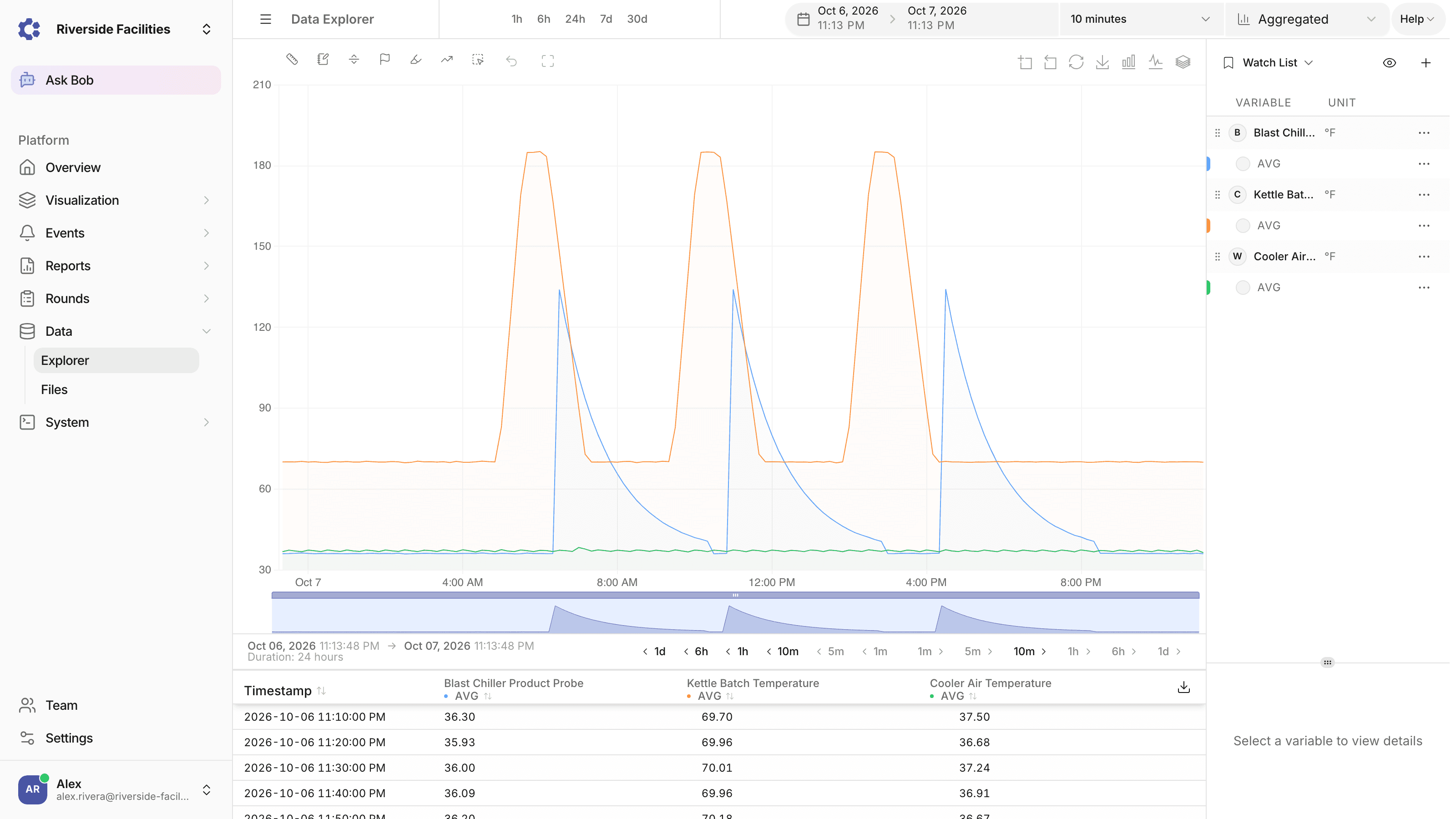
HACCP temperature monitoring runs continuously instead of once per check. Set thresholds at each critical control point, and the platform logs every reading, fires SMS and push alerts the moment a value drifts out of range, and records who acknowledged the alarm and when. Cold storage monitoring covers walk-ins, blast chillers, and freezer rooms in the same view. Plants that also run retail or distribution networks extend the same platform with refrigeration monitoring across their sites, and regulated pharmaceutical storage is covered under cold chain monitoring.

The same data runs the performance program. Downtime is captured from live machine state, OEE is computed per line and shift, and energy dashboards surface refrigeration and scheduling waste. That gives the plant the levers behind equipment performance and the evidence behind regulatory compliance from one data set.

ControlCom Connect asset report showing recorded readings for a single asset over a reporting period
A per-asset report generated from the recorded readings, not re-keyed from a logbook.
  • CCP temperature alarms in seconds
  • HACCP-ready records built automatically
  • Cold storage, blast chiller, and freezer monitoring
  • Line downtime and OEE per shift
What you get

Features built for food and beverage manufacturing monitoring

Six capabilities that replace the clipboard, the datalogger portal, and the end-of-shift spreadsheet.

01

Continuous CCP temperature monitoring

Cook, chill, hold, and storage temperatures logged continuously from calibrated 4-20mA, RTD, and thermocouple probes, plus Modbus, BACnet, and MQTT devices. Every reading is timestamped and kept, not sampled once per check.

02

Vendor-neutral plant connectivity

One platform reads the PLCs on the line, the refrigeration controllers, and the building systems over Modbus TCP/RTU, OPC UA, EtherNet/IP, BACnet, and MQTT. Mixed-vendor plants land on one screen without a rip-and-replace project.

03

Alerts that reach the right shift

Per-asset thresholds, severity tiers, and escalation paths deliver SMS, push, Slack, and email in parallel. The edge gateway evaluates thresholds locally, so alarms fire even when the plant loses its internet connection.

04

HACCP-ready records and reports

Any dashboard exports as a PDF for any historical date range, with pre-built templates for HACCP and FDA reporting and scheduled delivery to the QA distribution list.

05

Line downtime and OEE

Downtime is detected from live machine state and rolled into a Pareto, and OEE is computed per line, shift, and product. Short stops and slow cycles that never reach the clipboard show up where the team can act on them.

06

Energy and refrigeration cost

Live energy dashboards, utility-bill ingestion, and load-factor reports built from the data the platform already collects. Refrigeration waste, scheduling waste, and peak-demand charges become visible line items.

Key metrics

What changes when food and beverage manufacturing monitoring goes real-time

The four numbers plant and QA leadership track, surfaced automatically from the data the platform is already collecting.

Seconds
Mean time to alert
SMS, push, and email fire within seconds of a CCP threshold breach, not at the next scheduled check.
100%
CCP record coverage
A complete, searchable temperature record for every monitored control point, every reading, every excursion.
30-50%
Hidden line loss exposed
Short stops, slow cycles, and quality losses that never reach a clipboard show up in the downtime Pareto.
12-20%
Energy per plant
Typical reduction once monitoring surfaces refrigeration, scheduling, and peak-demand waste.
FAQ

Food and beverage monitoring questions, answered

Common questions from QA, plant engineering, and operations leaders evaluating ControlCom Connect.

The whole plant, on one platform. Production lines are read directly from the PLCs over Modbus TCP/RTU, OPC UA, and EtherNet/IP, so run state, counts, and process temperatures stream in live. Cold storage rooms, blast chillers, and freezers report through the calibrated probes and controllers you already own. Refrigeration systems, boilers, and building equipment connect over BACnet and MQTT. All of it lands in the same asset hierarchy, so a dashboard can show one line, one room, one building, or the whole site, and an alarm on any point follows the same thresholds, severity tiers, and escalation paths. The practical difference is that the line, the cold rooms, and the utilities stop living on three separate screens: when a chill cell drifts, the shift lead, the refrigeration tech, and QA are all looking at the same record.

Get started

Pilot plant monitoring on one line or one cold room

Start with one line or one cold room. We onboard the existing PLCs, probes, and controllers, configure the alarms and HACCP-ready reports your QA team needs, and run alongside your current process for ninety days. No rip-and-replace. No cutover risk. Expand across the plant on your schedule.