What is ControlCom Connect?
ControlCom Connect is a vendor-neutral, cloud-native industrial IoT (IIoT) platform that unifies monitoring, analytics, energy management, and compliance reporting across every site and every piece of equipment you run. Unlike single-vendor stacks, it treats Modbus, OPC-UA, BACnet, EtherNet/IP, and MQTT devices as equals, so Allen-Bradley, Siemens, Mitsubishi, and legacy controllers all land in one dashboard. It works as a modern cloud SCADA alternative without the on-premise server sprawl: a containerized edge agent collects data at the site, buffers readings through internet outages, and syncs to the cloud, so a multi-site fleet view is live in days, not months. Operators get real-time dashboards, anomaly detection, audit-ready compliance reports, and alerts by SMS, email, and mobile push, all from a single platform. Plans meter the data you publish, not tags, and per-variable deadbands and stale intervals let you choose: broad sweeps of points logged on change, or critical ones sampled fast. Adding a tag is an engineering call, not a purchase order.
The same data feeds the energy side: utility metering, demand, and load factor analysis for teams focused on energy usage. The pricing page lists the plans, and teams weighing a traditional SCADA build can start with the Ignition comparison.
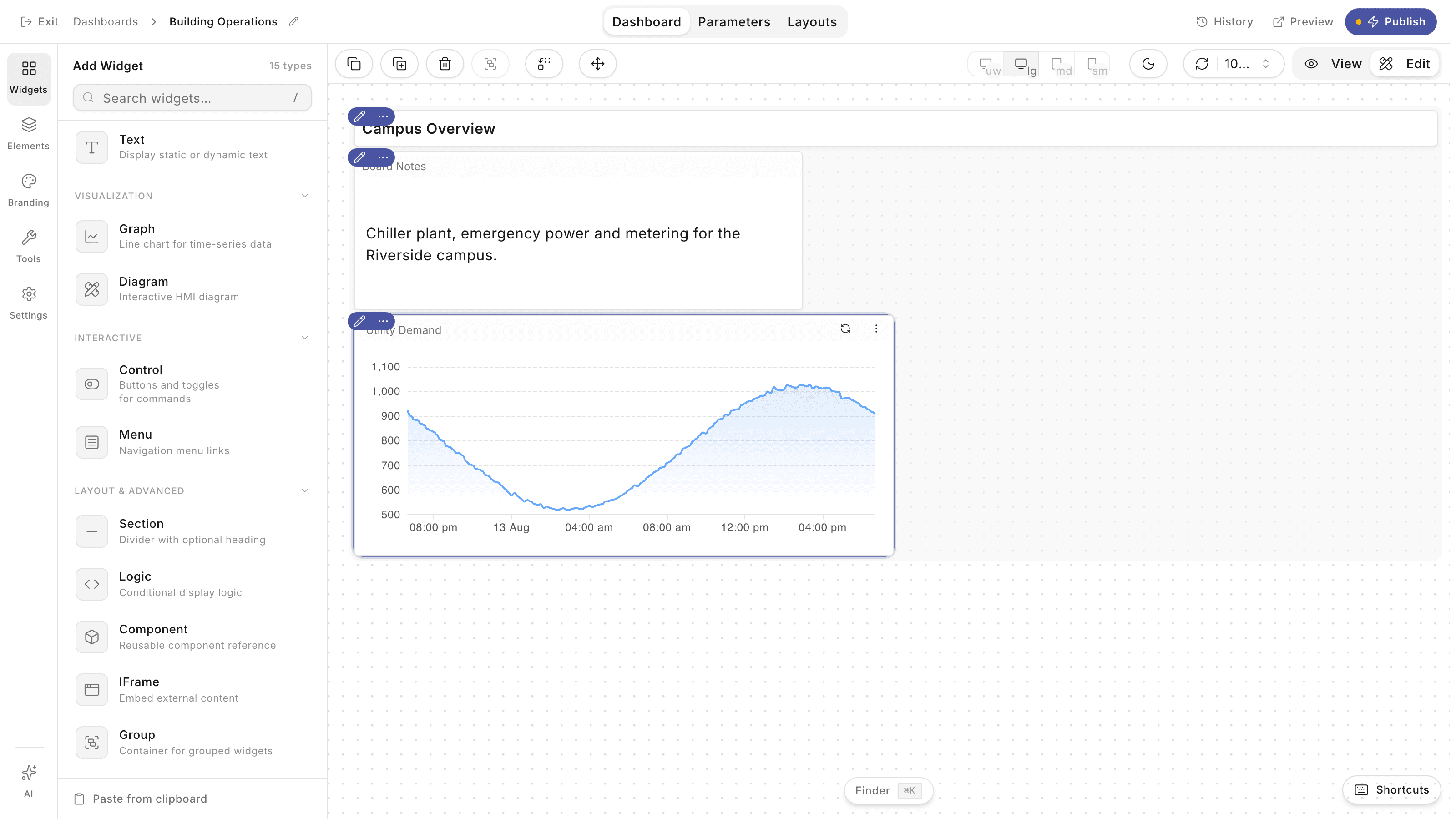
Real-time dashboards in minutes.
Operational dashboards with customizable widgets and live data visualization, built without waiting weeks for custom code.
- Drag & drop builder: 50+ pre-built widgets out of the box.
- Real-time updates: readings stream in every second, no manual reload.
- Multi-site comparison: trend the same metric across every facility, side by side.
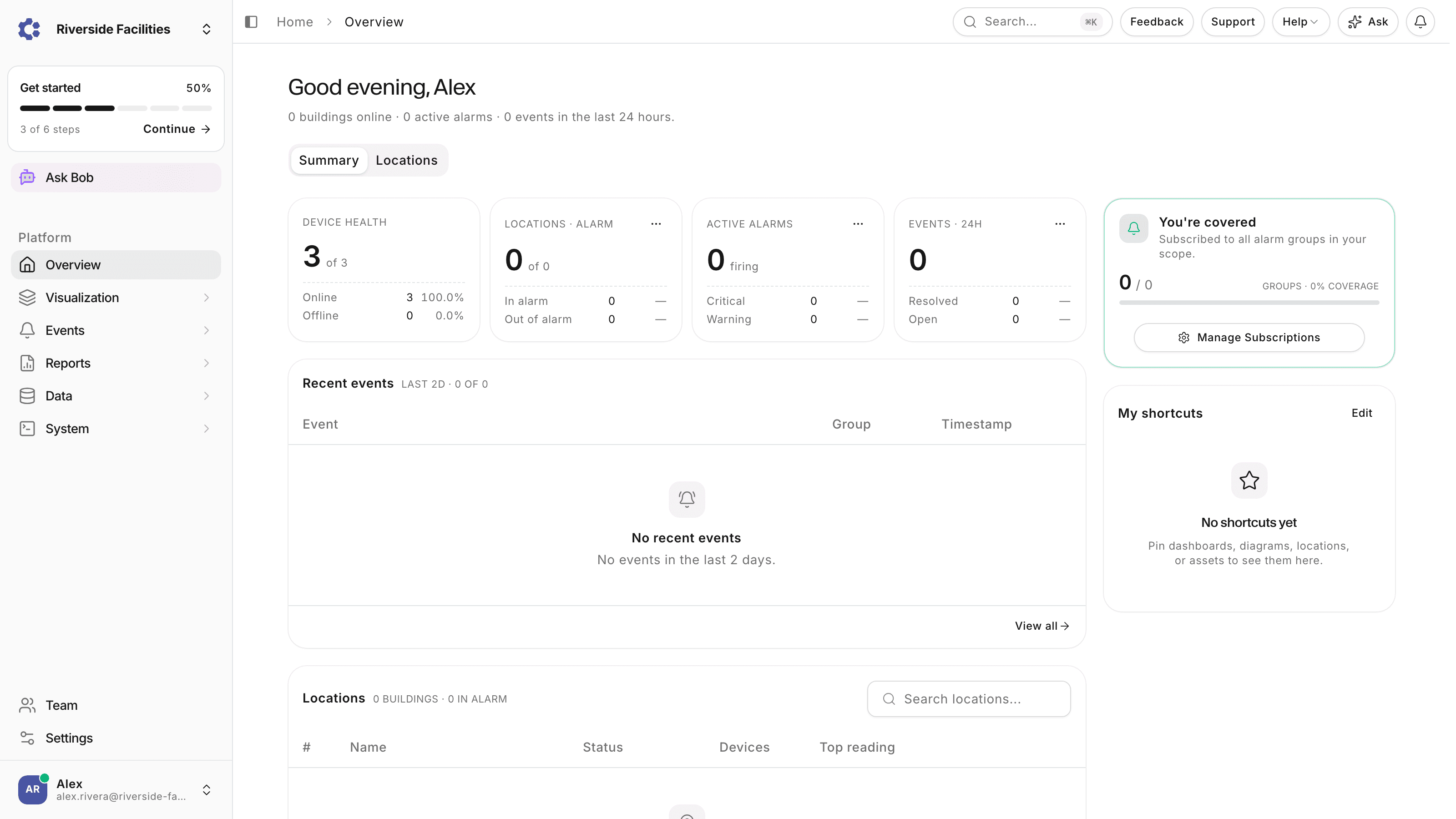
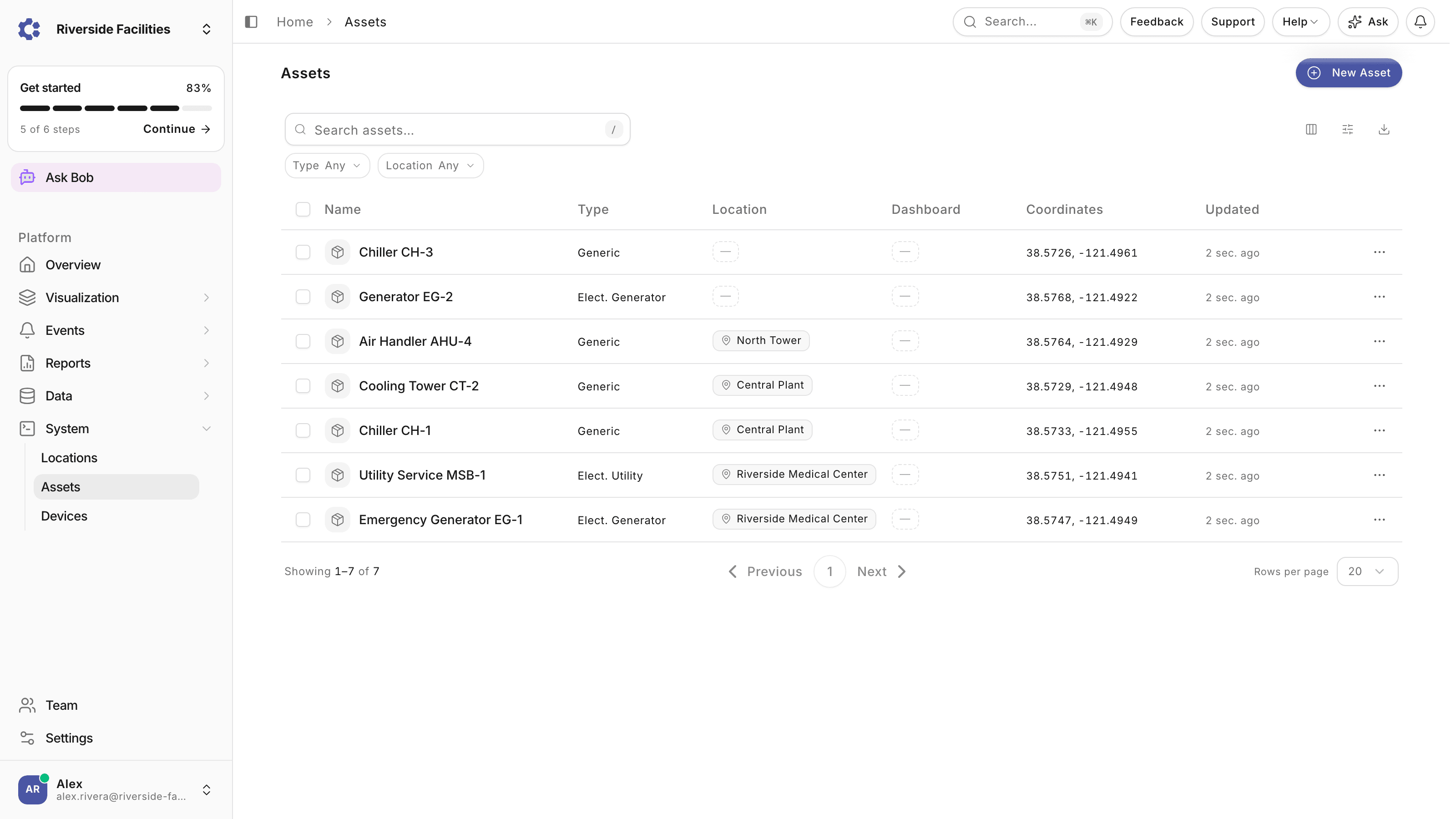
Every asset, tracked and accounted for.
Monitoring and management of industrial assets, with alarms and anomaly detection that surface trouble before it spreads.
- Health monitoring: track condition and performance on every asset.
- Maintenance scheduling: plan service windows around real condition data.
- Location-based organization: group assets by site, line, or system.
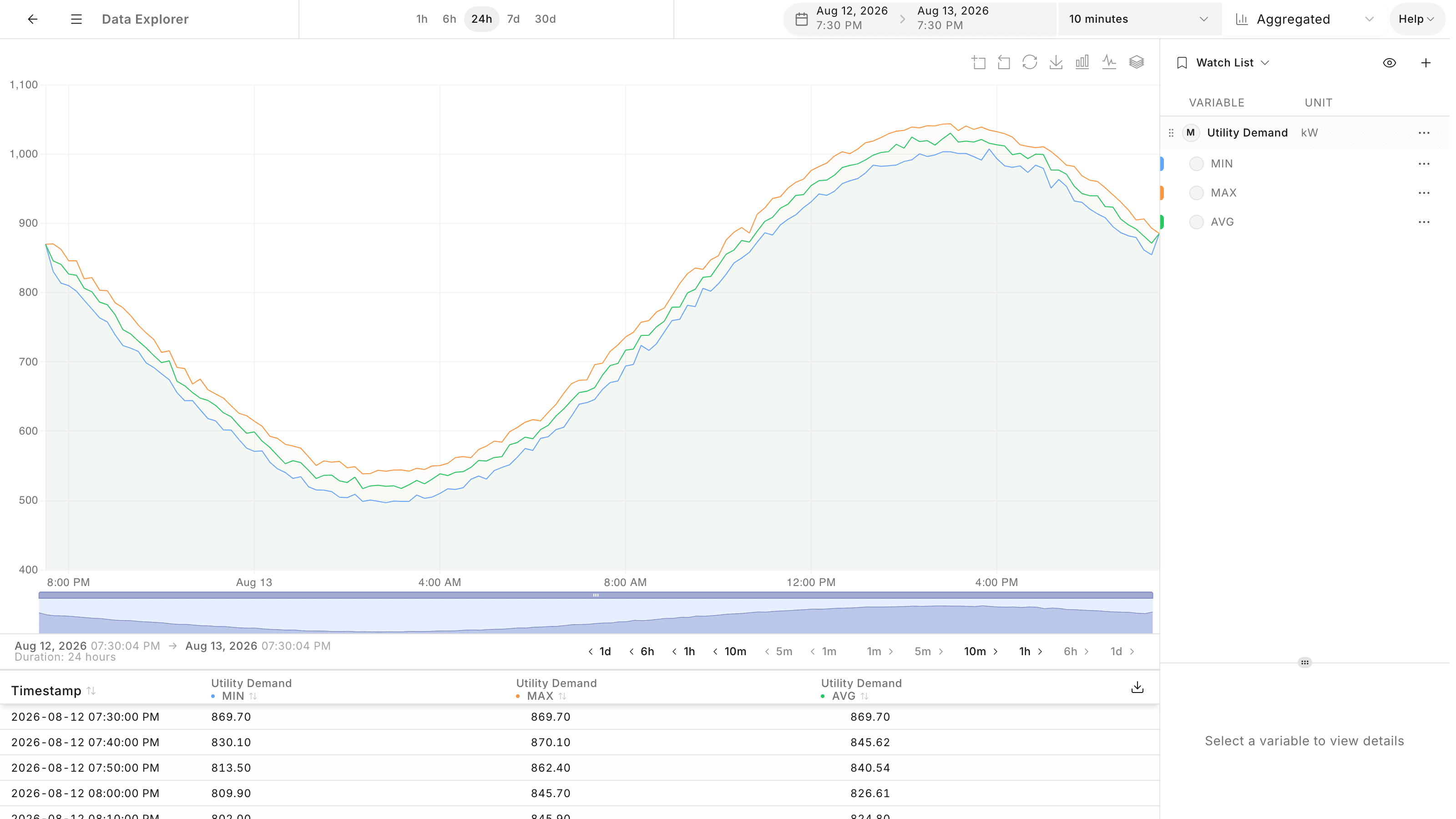
Turn raw readings into decisions.
Advanced data exploration, custom reports, and insights for better decision making, with audit trails for the records you have to keep.
- Data exploration: slice live and historical readings without exporting.
- Custom reports: build and schedule the reports your team actually needs.
- Compliance-ready: audit trails and exports for required records.
Edge collection, cloud intelligence.
A containerized edge layer collects and buffers at the site; the cloud carries the fleet view.
A containerized edge agent that speaks every protocol.
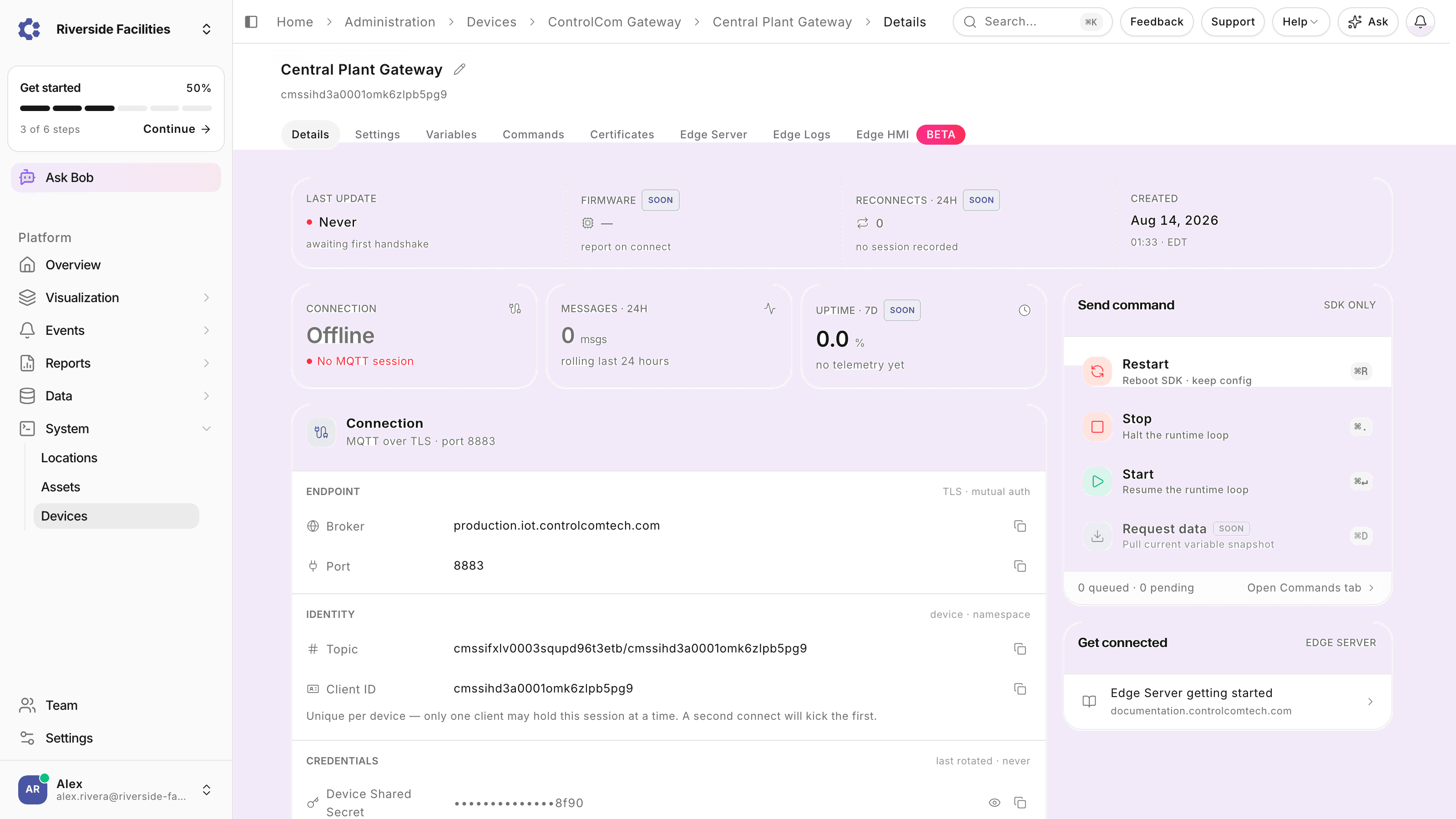
The ControlCom Edge Server deploys via Docker on hardware you already have: industrial PCs, ARM devices including the Raspberry Pi, or a virtual machine. It reads Modbus TCP and RTU, OPC-UA, BACnet, EtherNet/IP, and MQTT side by side, so the PLCs on a manufacturing line and the power meters in the electrical room land in the same pipeline. Per-point rules decide what travels: change-of-value detection, threshold triggers, time-based aggregation, and pre-calculations run at the edge.
- 30-40% compression, lossless, built for industrial time-series data.
- Scheduled and event-driven uploads you control per site.
- Outbound-only connection, no inbound firewall holes into the OT network.
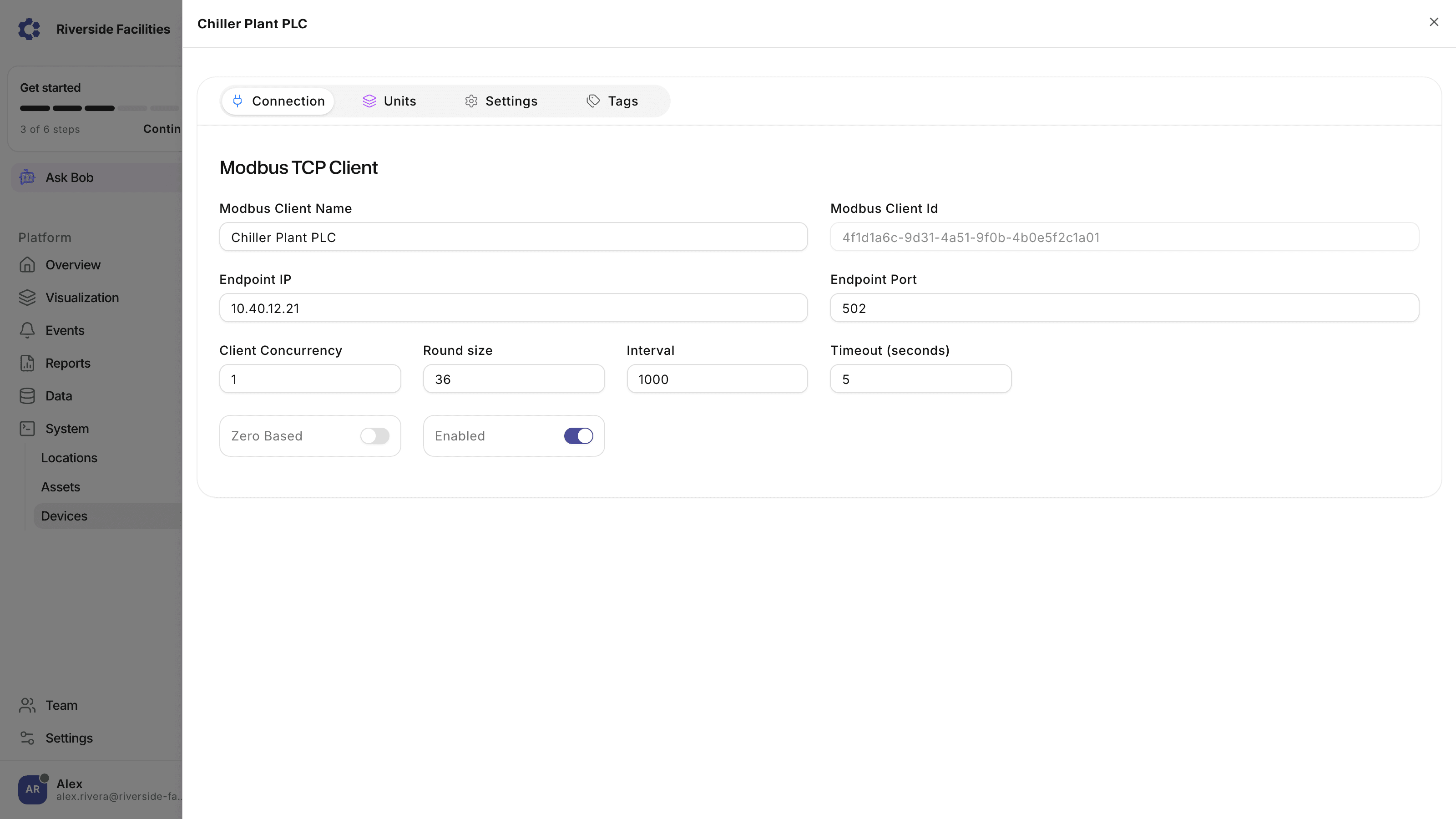
Sites keep running when the internet does not.
The Edge Server stores readings locally and keeps working when the connection drops, and Edge HMI panels connect to it directly, so operators still see live values and controls while a site is offline. When the link returns, buffered data syncs and the fleet view fills back in with nothing lost. Hybrid deployment fits water treatment plants, the standby generator fleets behind data centers, and high-security sites: the process runs on-premise while analytics and reporting run in the cloud.
- Local buffering through outages, with automatic sync on reconnect.
- Edge HMI panels for on-site visibility with no internet dependency.
- Cloud, hybrid, or on-premise: the same platform in every topology.
Platform questions, answered
What is ControlCom Connect?
ControlCom Connect is a vendor-neutral, cloud-native industrial IoT (IIoT) platform that unifies monitoring, analytics, energy management, and compliance reporting across every site and every piece of equipment you run. The platform organizes an operation as a hierarchy: organizations at the top, then locations, devices, assets, and the individual variables each device reports. Data arrives through the ControlCom Edge Server, which reads industrial protocols at the site and forwards readings to the cloud, or through the API for custom hardware. On top of that stored data sit real-time dashboards, SCADA-style diagrams, alarms with SMS, email, and mobile push notifications, a Data Explorer for historical analysis, and scheduled compliance reports. Everything runs in the browser and on mobile, so the plant manager and the on-call technician are looking at the same live picture.
Which protocols and devices does it support?
Modbus TCP and RTU, OPC-UA, BACnet, EtherNet/IP, and MQTT are all first-class, read side by side by the ControlCom Edge Server at the site. Because the platform is protocol-first rather than brand-first, Allen-Bradley, Siemens, Mitsubishi, ABB, and legacy controllers land in the same dashboard without a rip-and-replace: if the device speaks one of these protocols, it connects. Beyond the built-in protocol clients, a Sparkplug B listener picks up MQTT devices publishing in that convention, custom hardware can push readings directly through the HTTP API or MQTT, and a Node-RED integration covers gateways that already run flows. Every connected device exposes its data points as variables, the unit everything else is built from: assets combine them into equipment views, alarms watch them, and dashboards chart them, regardless of which protocol produced the reading.
How long does it take to deploy?
Days, not months, and the sequence is short. The ControlCom Edge Server deploys as a Docker container on hardware you already have: an industrial PC, an ARM device such as a Raspberry Pi, or a virtual machine on VMware, Hyper-V, or KVM. Point its protocol connectors at the equipment, and readings start flowing into the platform as variables. From there, assets, dashboards, and alarms are configured in the browser rather than in custom code, so a working multi-site dashboard is typically live within the same week the project starts. There is no server build-out on your side because the cloud layer is already running, and the edge agent's outbound-only connection keeps the IT conversation to a single egress rule instead of a firewall redesign. Each site after the first repeats the same recipe faster.
Can it run on-premise or in a hybrid setup?
Yes. The ControlCom Edge Server is a standalone application on your local network that does not depend on cloud connectivity. It gathers data from the field devices around it, stores readings locally, and forwards them to ControlCom Connect when a connection is available; if the site goes offline, the local system keeps working and no data is lost. Operators keep their visibility too: Edge HMI panels installed on local machines connect directly to the Edge Server, so live values and controls stay on screen through an outage. When the link returns, buffered readings sync and the fleet-wide picture fills back in. That architecture supports cloud-first deployments, hybrid setups where control stays local while analytics run in the cloud, and on-premise control rooms at high-security or remote sites where connectivity is restricted or intermittent.
How is the data secured?
The edge agent makes an outbound-only connection, so no inbound firewall ports are opened into the OT network and the equipment side of the deployment is never reachable from the internet. Data is encrypted with TLS in transit and encrypted at rest. Inside the platform, organizations are isolated from each other in a multi-tenant architecture, and role-based access control decides per user who can view dashboards, acknowledge alarms, edit configuration, or send commands, with multi-factor authentication and audit logging on top. Reports and scheduled jobs follow the same permission model, so an operator can watch a schedule without being able to change it. We hold a SOC 2 Type II report, available under NDA, and sites with stricter requirements can run hybrid or fully local, with controlled synchronization to the cloud.
See it in your facility.
Start on the Developer plan and put your own equipment on a dashboard, or take 30 minutes with engineers who've actually run the plant.
Sizing it up?See plans and allotments.