Regulatory compliance

Stay audit-ready with confidence.

ControlCom Connect captures compliance evidence as you operate: automated monitoring, tamper-evident audit logs, and reports generated on the schedule your regulator expects.

Automated documentation · Audit-ready reporting · Tamper-evident audit trail
What this is

Compliance monitoring software, defined.

Compliance monitoring software records the operating data a regulation requires you to keep, as the equipment produces it, and turns that record into the documents an auditor accepts. Instead of staff copying generator hours, temperatures, and test results into spreadsheets before an inspection, the evidence accumulates continuously, time-stamped and attributed, ready to hand over.

ControlCom Connect does this from the same time-series data the rest of the platform reads. The ControlCom Edge Server collects readings from equipment on site, the cloud stores them, and the Report stage produces the documents that leave the platform: generator compliance reports checked against Joint Commission load-test requirements, runtime reports for EPA filings, and scheduled asset reports emailed as PDFs.

Underneath the reports sits the control layer an audit examines: enforced multi-factor authentication, role-based access, and a tamper-evident audit trail with time-stamped electronic signatures, the controls 21 CFR Part 11 requires of an electronic record system.

For a team pursuing this outcome, done is when audit preparation becomes retrieval. The generator test performed on Tuesday appears as a Passed report without anyone opening the page, the runtime log builds itself from the engine-hours reading, and the monthly filing leaves the platform on schedule with its run history recorded. When an inspector asks who acknowledged an alarm in March, the answer is a filtered Alarm History view and an export, not a week of reconstruction.
The status quo

Why audits are painful today.

Most compliance programs run on manual capture, so the record is only as complete as the busiest week allowed it to be.

01 / Evidence

The record is assembled after the fact

Generator test logs, temperature records, and runtime hours live in spreadsheets, binders, and chart recorders. Before an audit, someone reconstructs months of evidence by hand, hoping nothing is missing.

02 / Integrity

Nobody can prove who did what

When a reading is corrected or an alarm is silenced, there is no record of who acted or when. An auditor who asks for attribution gets a shrug, and a finding follows.

03 / Deadlines

Reporting eats engineering time

Monthly and quarterly filings mean pulling data from disconnected systems into the same document formats, again and again. The hours go to formatting, not to fixing what the data shows.

What the platform does

The evidence, captured as you operate.

Reports built from stored readings, an audit trail on every action, and delivery on the schedule the regulation sets.

Audit-ready reporting

Compliance reports that write themselves.

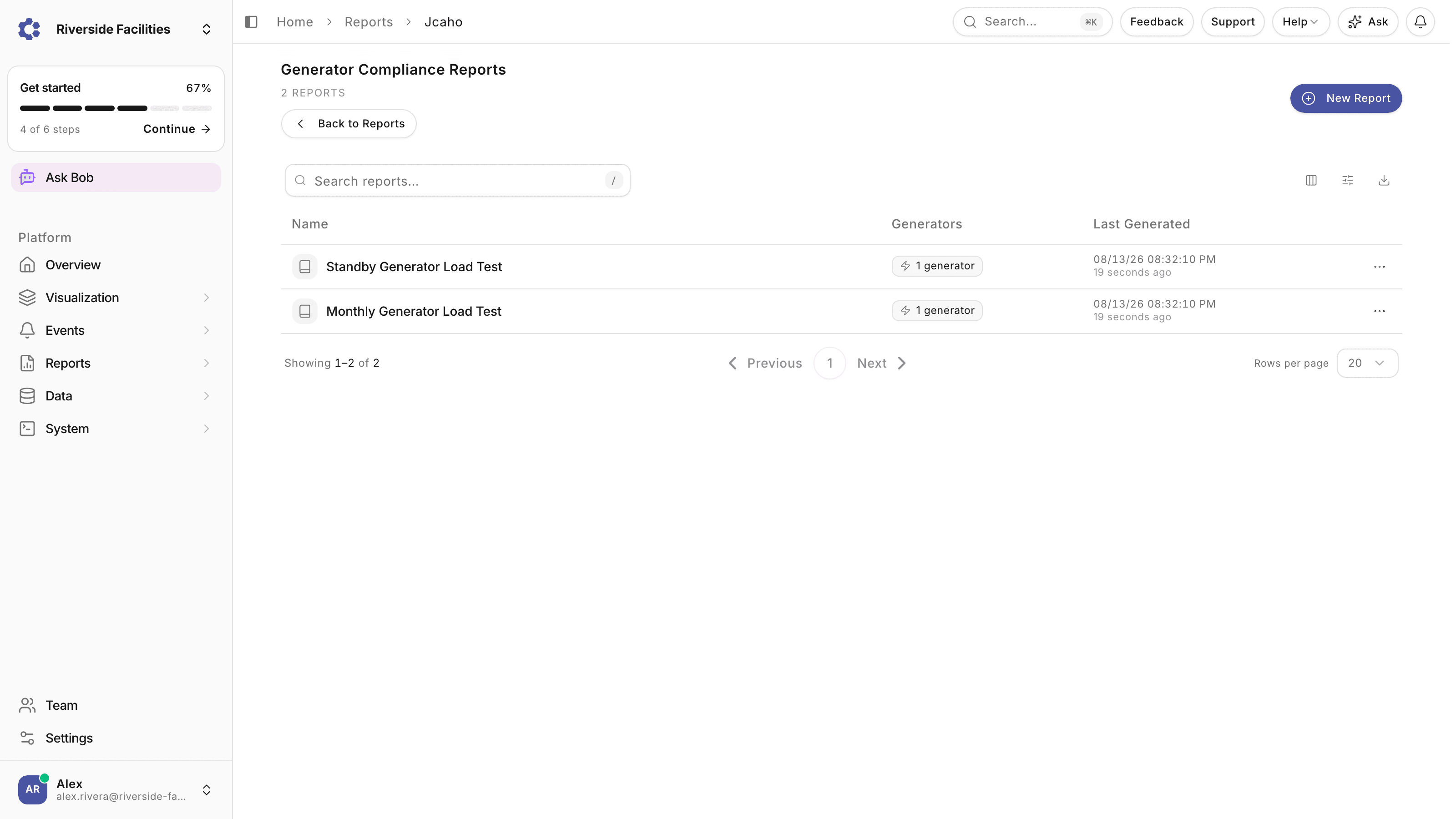
Generator compliance reports document each load test against Joint Commission requirements. The platform checks each active configuration hourly, scans the previous day for generator runs, and writes one report per run it finds, marked Passed or Incomplete with the reason stated. Save to PDF produces the copy you hand to an inspector. This is the mechanism hospitals lean on for generator testing evidence, and the reports are generated against assets, so the generator has to exist as an asset with its variables attached before the watching starts.

  • Automatic run detection writes a report for every load test, unprompted
  • Pass or incomplete verdicts with the specific reason, such as load held under 30 continuous minutes
  • EPA runtime reports split each run into emergency and non-emergency hours
Generator compliance report configurations in ControlCom Connect, each producing a report per detected run
21 CFR Part 11 controls

An electronic record an auditor can trust.

Every user action and alarm event is logged in a tamper-evident audit trail. Alarm acknowledgements carry a time-stamped electronic signature recording who accepted the alarm and when. Enforced multi-factor authentication and role-based access control scope who can see and change the record, implementing the controls 21 CFR Part 11 requires; the security page lists each control and its plan availability.

  • Tamper-evident audit logging on every user action and alarm event
  • Electronic signatures time-stamped on acknowledgements, with user attribution
  • Validation support for customer-led IQ/OQ/PQ packages in regulated environments
Automated documentation

Delivered on the schedule the regulation sets.

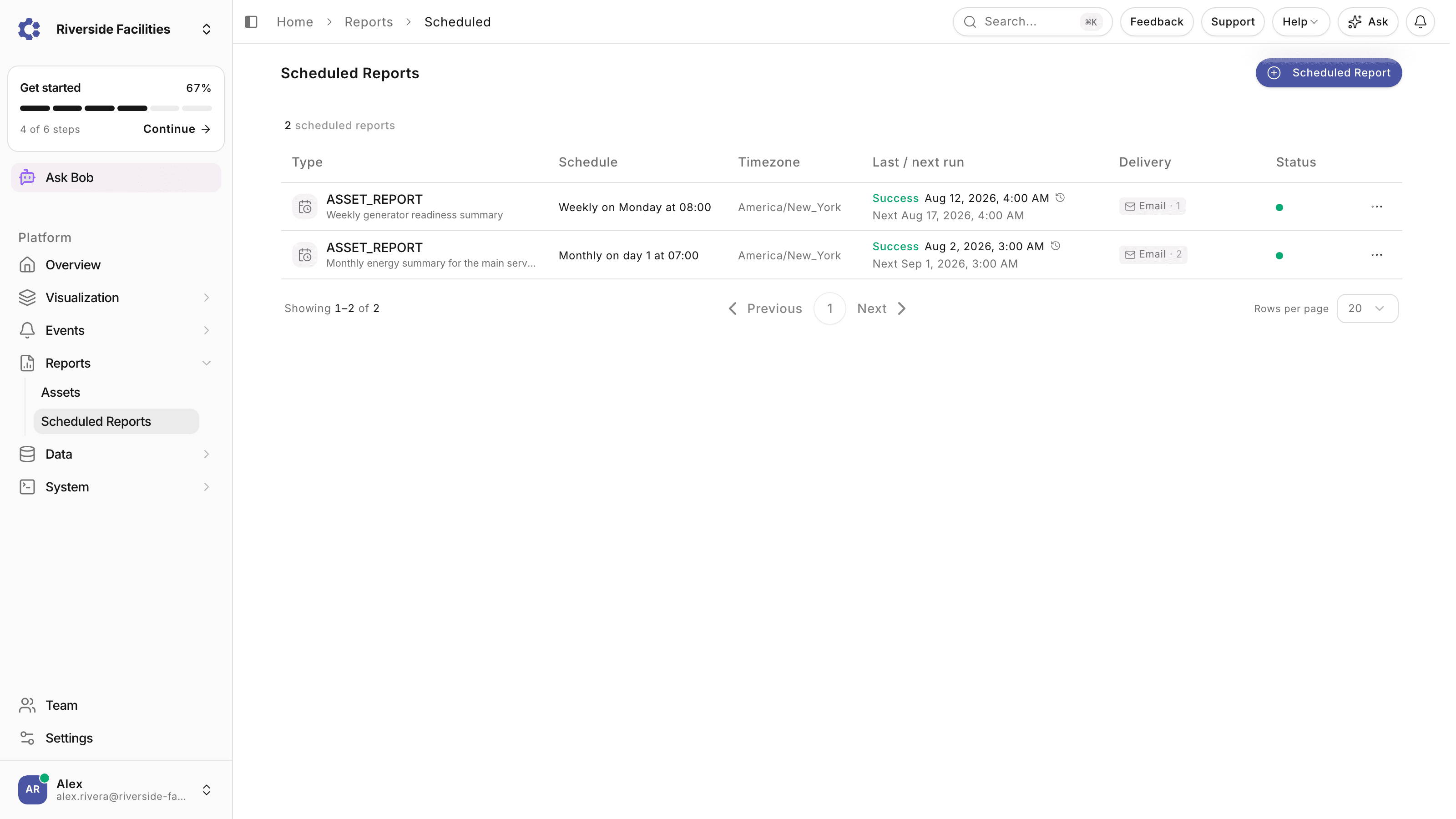
Scheduled reports run on their own, hourly, daily, weekly, or monthly, and email the result as a PDF to the recipients you list. Each run resolves a rolling reporting window fresh, so the document always covers the current period, and run history shows every delivery and its result. The same pipeline carries the continuous temperature records that pharmaceutical cold chain storage keeps for FDA and USP expectations and that food and beverage plants keep for HACCP.

  • Recurring PDF delivery to any email address, inside or outside your organization
  • Run history per job with the last result and the next scheduled run
  • CSV export of the raw readings when the auditor wants the underlying data
The scheduled reports list in ControlCom Connect showing recurring reports with schedules, last runs, and email delivery
Outcomes

What automated compliance changes.

Zero
Manual readings once capture is automated. The platform records every monitored value as it operates.
20+HRS
Manual paperwork replaced each month by generated compliance documents.
60%
Reduction in audit preparation time when evidence accumulates as you operate.
24/7
Continuous capture of compliance parameters, with alerts when a value drifts out of range.
Integration

Your controllers and SCADA stay in place.

Compliance data comes from the equipment you already run. The platform reads it over the protocols that equipment already speaks.

Protocols

Collected over the protocols on your site.

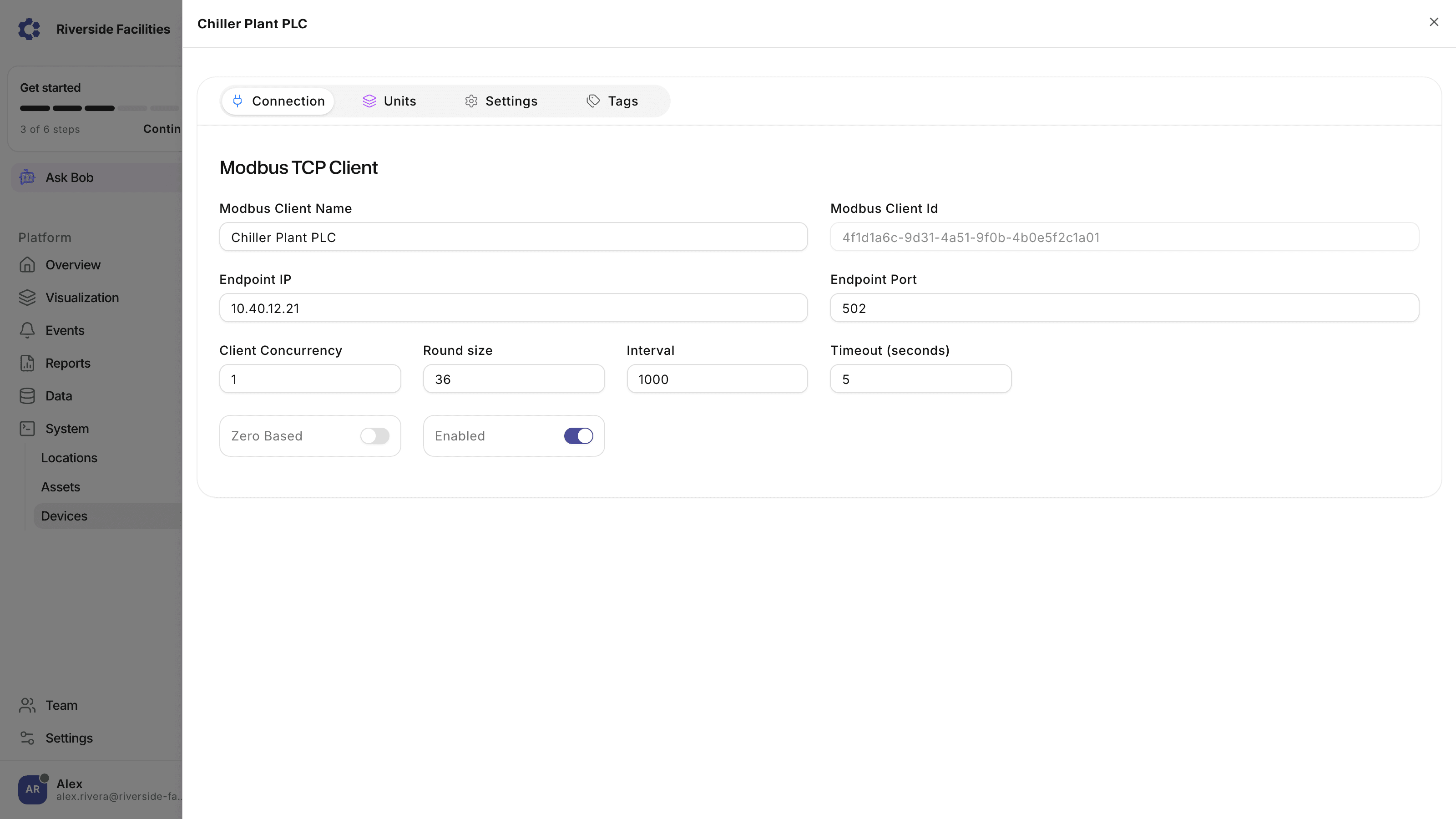
The ControlCom Edge Server runs on hardware at the site and speaks Modbus TCP/RTU, OPC-UA, EtherNet/IP, BACnet, and MQTT, so existing controllers, BMS, and SCADA systems keep doing their jobs while their readings flow into the compliance record. It makes outbound connections only and buffers data locally through a WAN outage.

  • Modbus TCP/RTU, OPC-UA, EtherNet/IP, BACnet, MQTT cover mixed-vendor equipment without replacement
  • Outbound-only edge architecture opens no inbound ports into the OT network
  • Local buffering keeps the record gap-free through an outage
The Modbus client editor in ControlCom Edge Server administration, where field protocol connections are configured
FAQ

Compliance questions, answered.

The questions quality and compliance managers ask when evaluating regulatory compliance software.

The platform implements the controls 21 CFR Part 11 requires of an electronic record system: enforced multi-factor authentication, role-based access control that scopes what each user can see and change, tamper-evident audit logging on every user action and alarm event, and time-stamped electronic signatures on acknowledgements recording who accepted an alarm and when. Validation is supported through customer-led IQ/OQ/PQ packages, which is the model regulated sites usually need, because the system being qualified is your configured deployment rather than the vendor's. Two practical notes for an evaluation: the security page lists each control alongside the plan tier that carries it, since audit logs are a Professional and Enterprise plan feature, and Part 11 applies to the record system as operated, so the IQ/OQ/PQ documentation exists to support the assessment an auditor will actually perform.

Get started

Walk into the next audit with the record already built.

Book a 30-minute demo with engineers who have run the platform, and see the compliance reports generated from live data.